
About Us
Welcome to the Willoughby Lab at UAB! Our lab focuses on magnetic resonance imaging and its applications in oncology. Our research spans the fields of physics, biology, and engineering. Besides imaging, we are driven to explore innovative drug-free approaches to mechanomedicine. We believe the future of medicine is mechanical!

Our Vision
Our goal is to be a global leader in the clinical translation of noninvasive mechanotherapeutic techniques against cancer. We aim to provide a supportive, collaborative environment that nurtures curiosity and innovation. We welcome new collaborations and freely share resources in the spirit of cooperation. We know that science is a cooperative process, not a doctrine. We know that training the next generation of critical thinkers is our most important task. We believe that logic, reason, and compassion lead to a better world — one where technology serves everyone. We believe that science and the future are for everyone!
People

Ryan Willoughby, Ph.D.
Principal Investigator
Dr. Willoughby is an expert in magnetic resonance with an emphasis on physics and engineering. He received his Ph.D. in physics from UAB in 2019. In 2023, he started the Willoughby Lab as an instructor in the Division of Advanced Medical Imaging at UAB.
His research program fuses materials science and advanced MRI to better understand the physical properties of cancer, focusing on
- Quantitative MRI to characterize tumor microstructure with histological validation,
- Characterization of tumor extracellular matrix using ex vivo vibrational spectroscopy, and
- Energy-based, focused ultrasound approaches to mechanical modulation of tissues.
Research Areas
The tumor microenvironment is a dynamic material system with processes that act across spatial and temporal scales. Cancer is an emergent phenomenon that arises from complex, nonlinear, multi-scale interactions between sub-cellular components, cell populations, extracellular matrices, and environmental/systemic factors. Decades of work has gone into understanding the relationships between subsets of cells and the mechanisms by which these relationships are established, altered, and broken down. Only relatively recently has it become clear that mechanical interactions between cells and their substrates play just as pivotal a role in the development and sustenance of disease.
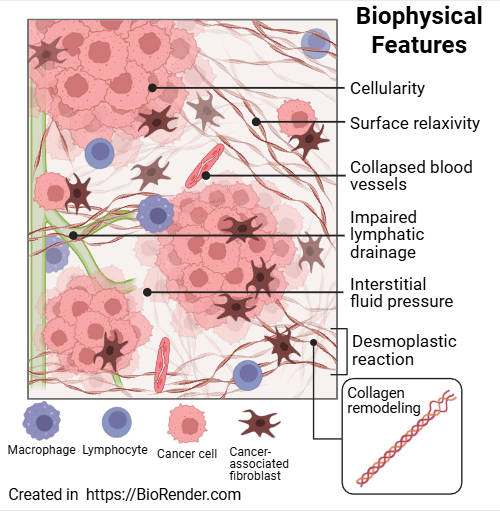
- Quantitative MRI:Characterizing tumor microstructure and mechanics with histological validation.
- Holographic Ultrasound: Applying acoustic holography to address clinical therapeutic needs.
- MR-ARFI: Visualizing noninvasive mechanical stimulation with MRI.
- Membrane & Protein Mechanics: Biophysical modeling in silico.
- Paramagnetic biomolecules: Using endogenous spin systems to help diagnose disease.
Visual Demonstrations
The structures and processes that support life span length and time scales. Biophysicists need to build an intuitive sense of scale in the nanoscopic and microscopic realms. These visualizations are designed to help build this intuition.
Selected Publications
- Willoughby WR, Odéen H, Jones J, Bolding M. Magnetic Resonance Imaging of Focused Ultrasound Radiation Force Strain Fields for Discrimination of Solid and Liquid Phases. Ultrasound in Medicine & Biology. 2023;49(8):1892-1900. doi:10.1016/j.ultrasmedbio.2023.05.004
Contact Us
Address: The University of Alabama at Birmingham, 1720 University Blvd, Birmingham, AL 35294
Email: wwilloughby@uab.edu